


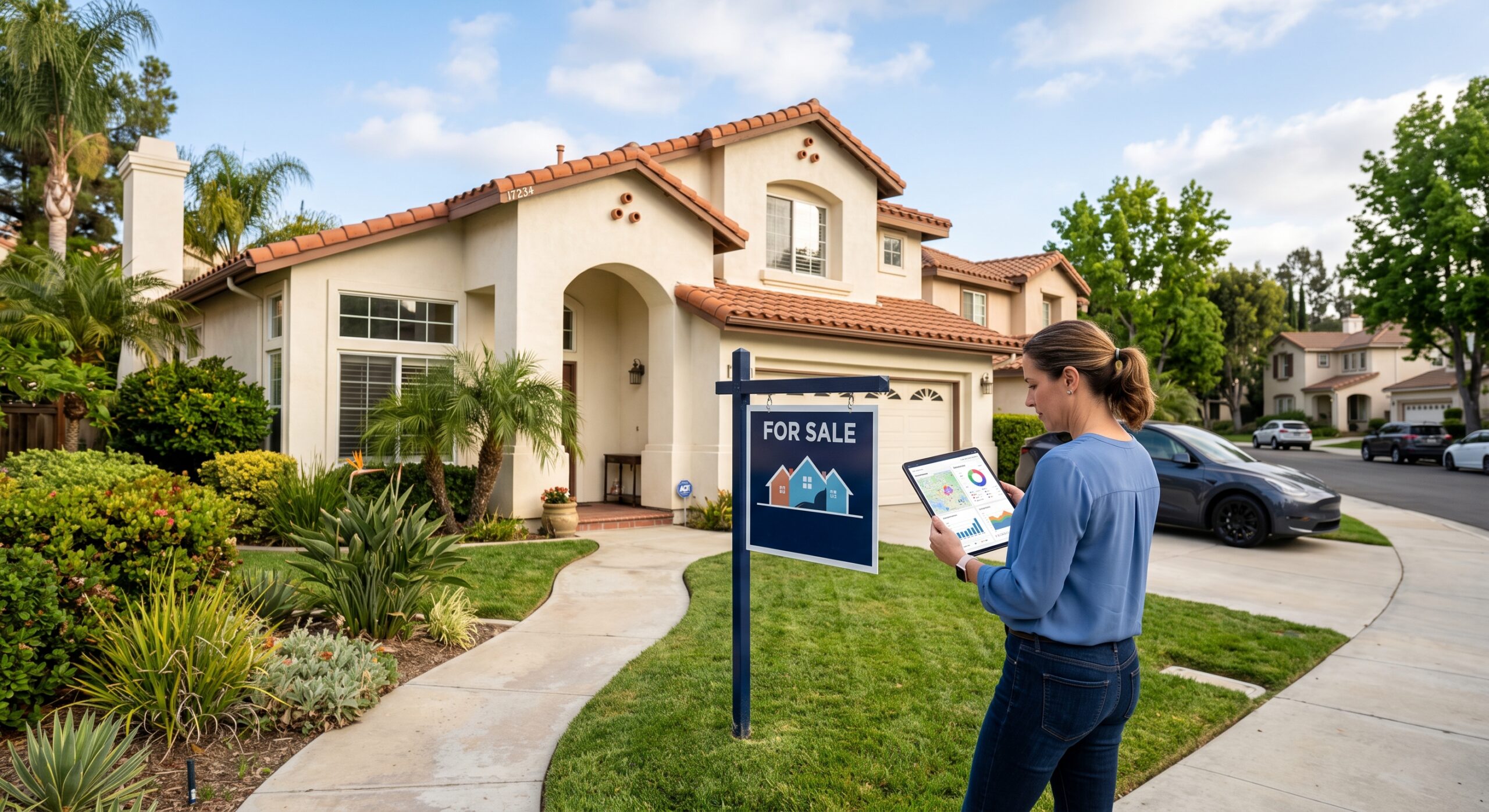
If you’re thinking about selling your Northridge home in 2026, one of the most important questions is simple: What does the local market data say about homes like yours?
Real estate is highly local. National housing headlines can provide useful context, but they don’t tell you exactly what buyers are willing to pay for a home on your street or how quickly a property with your size, condition, location, and features is likely to sell.
Current Northridge data shows a market where homes are still commanding substantial prices, but buyers have more time to evaluate their options than they did during the fastest periods of the market. That makes accurate pricing and smart preparation especially important.
What the Northridge Market Is Saying in 2026
Recent market data gives sellers several useful benchmarks.
Zillow’s July 2026 data puts the typical Northridge home value at approximately $1.07 million, with home values down about 0.9% over the previous year. Zillow also reported 146 homes for sale and a median sale price of approximately $1.12 million based on June data.
Realtor.com’s August 2026 market snapshot shows a $1.117 million median sold price, approximately $1.188 million median listing price, and a median of 40 days on market. Active listings stood at 178.
Redfin’s latest three-month data through June 2026 places Northridge’s median sale price at approximately $1.10 million, up 5.5% year over year. Homes averaged about 40 days on the market, compared with 33 days during the same period the prior year.
The numbers vary somewhat depending on the data source, property type, and reporting period. That’s normal. More importantly, they tell us something about the overall environment: Northridge remains a valuable market, but sellers cannot assume that every home will sell immediately or at any price.
Your Home’s Value Is More Than the Northridge Median
A neighborhood median is useful as a starting point, but it should never be treated as an automatic value for an individual property.
Two homes in Northridge can have very different values even when they’re only a few blocks apart.
Factors that can make a meaningful difference include:
- Square footage
- Lot size
- Number of bedrooms and bathrooms
- Renovation level
- Kitchen and bathroom updates
- Garage and parking
- Pool or outdoor living space
- Floor plan
- Curb appeal
- School boundaries
- Street location
- Proximity to major roads and amenities
- Views and privacy
- Overall condition
This is why recent comparable sales are often more useful to a seller than simply looking at an online home-value estimate.
Recent Comparable Sales Matter
When determining a listing strategy, look at homes that buyers have actually purchased rather than focusing only on current asking prices.
A comparable property that sold recently can reveal what buyers were willing to pay for a home with similar characteristics.
Ideally, your analysis should consider:
Recently Sold Homes:
These show what buyers actually paid.
Pending Sales:
These can provide a more current indication of demand because the transactions are more recent, even though the final sale price may not yet be public.
Active Listings:
These are your competition. If buyers are choosing between your home and five similar properties, your price and presentation need to stand out.
Expired or Withdrawn Listings:
These can also provide useful information. A home that sat on the market without selling may indicate that its price, condition, marketing, or positioning did not match buyer expectations.
Days on Market Can Tell an Important Story
Northridge homes are not necessarily selling overnight.
Current market data puts typical marketing time around 40 days, although individual properties can move much faster or much slower depending on price, condition, location, and demand.
That distinction matters.
A well-priced, updated home in a desirable location may attract significant attention shortly after hitting the market. Another home with a higher price, dated interiors, or less desirable characteristics could remain available considerably longer.
For sellers, this means the first few weeks on the market are important.
If a property receives very little interest, that’s often a reason to examine the strategy rather than simply wait and hope the market changes.
Price Reductions Are Part of the Data, Too
One of the most useful things sellers can watch is how often homes receive price reductions.
Realtor.com reported a median listing price around $1.188 million in Northridge in August 2026, while the median sold price was approximately $1.117 million. That gap doesn’t mean every home sells below asking, but it does demonstrate why sellers should distinguish between what homes are listed for and what buyers are actually paying.
Redfin’s June data also showed that about 28% of Northridge homes had price drops.
The lesson is straightforward: pricing high simply to “leave room to negotiate” can backfire.
If the initial price is too far above the market, the property may miss the buyers who would otherwise be interested. Over time, additional days on market and subsequent price reductions can make a listing appear less attractive.
What Buyers Are Looking for in Northridge
Today’s buyers are paying close attention to value.
They’re comparing homes not just by price, but by what they receive for that price.
For a Northridge seller, that means improvements that increase perceived value can be important.
Before listing, consider whether your home would benefit from:
- Fresh interior and exterior paint
- Improved landscaping
- Decluttering and professional staging
- Updated light fixtures
- Minor kitchen improvements
- Bathroom refreshes
- Professional photography
- Better curb appeal
- Repairs that could become negotiation points
- Highlighting usable outdoor space
Not every seller needs a major renovation. In many cases, strategic improvements and strong presentation can make a bigger difference than spending heavily on a complete remodel.
Location Still Matters Within Northridge
“Northridge” is not a single uniform market.
A home’s exact location can influence buyer interest and value. Street characteristics, nearby amenities, traffic patterns, school boundaries, lot characteristics, and surrounding properties can all affect how buyers perceive a home.
This is why neighborhood-level data should be taken one step further.
Instead of asking only:
“What is the median price in Northridge?”
A seller should ask:
“What have homes most similar to mine sold for recently, and how did those homes compare with mine?”
That is a much more useful question.
The Best Listing Price Is a Strategy, Not a Guess
Pricing a home isn’t simply about choosing the highest number that seems possible.
A strong pricing strategy considers three things:
1. What the data supports
Recent comparable sales provide the foundation.
2. What the competition looks like
Active listings show what buyers can choose from today.
3. How buyers are likely to react
The listing needs to fall within a price range that attracts the right audience.
The goal isn’t necessarily to price at the absolute lowest possible number. The goal is to position the home where it can generate meaningful buyer interest while still protecting the seller’s financial goals.
What Northridge Sellers Should Take Away From the Data
The current Northridge market offers an important message for homeowners considering a sale.
Homes are valuable, but buyers are paying attention to value.
With median prices around or above $1 million, even a small percentage difference in pricing can represent tens of thousands of dollars. At the same time, homes are taking longer to sell than they did a year ago according to Redfin’s latest comparable period.
That makes preparation, presentation, and pricing more important than ever.
A home that is positioned correctly can still attract strong demand. But sellers should avoid assuming that yesterday’s market conditions will automatically produce today’s results.
Before You Put Your Northridge Home on the Market
If you’re considering selling, start by gathering the neighborhood data before making major decisions.
Look at:
- Recent comparable sales
- Current competing listings
- Pending properties
- Days on market
- Sale-to-list ratios
- Price-per-square-foot trends
- Recent price reductions
- Property-specific features
- Condition of your home
- Current buyer demand
Then use that information to create a pricing and marketing strategy specifically for your property.
The Bottom Line
Selling a home in Northridge in 2026 is less about following a single market statistic and more about understanding the story behind the numbers.
Current data shows a Northridge market with home values around the $1 million-plus range, meaningful buyer demand, and a market pace that requires sellers to be thoughtful about pricing and presentation.
Your home’s value, however, is ultimately determined by its own characteristics and the buyers shopping for that type of property.
If you’re considering selling your Northridge home, a detailed analysis of recent neighborhood sales can help you understand where your property fits in today’s market before you decide on a listing price.

Leave a Reply